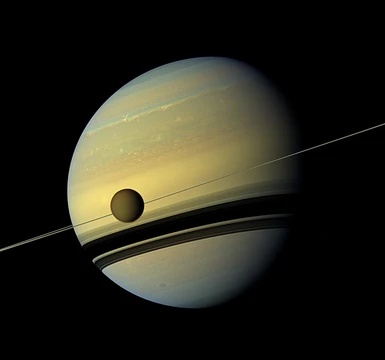
Orbit
Curved trajectory of an object under an attracting force.

In celestial mechanics, an orbit is the curved trajectory of an object under the influence of an attracting force, also known as an orbital revolution. Orbits are fundamental to understanding the motion of planets around stars, natural satellites around planets, and artificial satellites around objects or positions in space such as planets, moons, asteroids, or Lagrange points.
- field
- Celestial mechanics
- known_for
- Describing the curved trajectory of objects under gravitational influence, including elliptical orbits as per Kepler's laws
Lore & Background
Historically, the apparent motions of the planets were described by European and Arabic philosophers using the idea of celestial spheres, which posited perfect moving spheres or rings to which stars and planets were attached. This concept originated with Hellenistic astronomy, particularly Eudoxus and Aristotle. After more accurate measurements, theoretical mechanisms such as deferent and epicycles were added by Ptolemy. The model was originally geocentric but was modified by Copernicus to place the Sun at the center to help simplify it. The model was further challenged during the 16th century as comets were observed traversing the spheres. The basis for the modern description of orbits was first formulated by Johannes Kepler, whose results are summarized in his three laws of planetary motion. He found that planetary orbits are elliptical, not circular, and that the Sun is at one focus. He also found that orbital speed depends on the planet's distance from the Sun, and established a universal relationship: the cubes of the planets' distances from the Sun are proportional to the squares of their orbital periods. Isaac Newton later demonstrated that Kepler's laws were derivable from his theory of gravitation, showing that orbits of bodies subject to gravity were conic sections. Albert Einstein's general theory of relativity provided a more accurate understanding, accounting for gravity as due to curvature of spacetime, with orbits following geodesics.
Reader's Guide
The concept of an orbit is central to celestial mechanics, providing the framework for predicting the motions of planets, satellites, and other bodies. Kepler's laws established the elliptical nature of orbits and the relationship between orbital period and distance, which Newton later grounded in his theory of gravitation. Newton showed that orbits are conic sections and that bodies orbit their common center of mass. While Newtonian mechanics adequately approximates most orbital motion, Einstein's general theory of relativity offers a more precise description, particularly in strong gravity fields or at high speeds. The historical development from celestial spheres to Kepler's ellipses to Newton's gravity and Einstein's relativity illustrates the progressive refinement of orbital theory. Orbits remain essential for space exploration, satellite deployment, and understanding planetary system dynamics, with specific terms like perigee, apogee, perihelion, and aphelion used for different central bodies.
Did You Know?
- Orbits are normally regularly repeating trajectories, but may also refer to non-repeating trajectories.
- Planets and satellites follow elliptic orbits with the center of mass at a focal point of the ellipse, as described by Kepler's laws.
- Newton demonstrated that Kepler's laws were derivable from his theory of gravitation, and that orbits of bodies subject to gravity were conic sections.
- Einstein's general theory of relativity explains gravity as due to curvature of spacetime, with orbits following geodesics.
Engineering Marvel: The Mirror and the Sunshield
The James Webb Space Telescope's primary mirror is a 6.5-meter-diameter assembly composed of 18 individual hexagonal segments crafted from beryllium and coated in gold for infrared reflectivity, with a thin glass layer added for durability. This design yields a light-collecting area of roughly 25 square meters—more than six times what Hubble's 2.4-meter mirror provides. Because Webb is built to detect infrared radiation, the entire telescope must be kept below 50 Kelvin, a temperature so cold that any thermal emission from the hardware itself would drown out the faint signals it is trying to capture. To achieve this, a five-layer sunshield stands between the optics and the heat sources of the Sun, Earth, and Moon. Despite this massive mirror, Webb's overall mass is only about half that of Hubble, a testament to the lightweight materials and folded-launch architecture that made the design possible.
Seeing the Universe's Dawn
Webb was purpose-built to peer into the infrared spectrum, spanning from long-wavelength red visible light all the way through mid-infrared at 28.5 micrometers. This choice is not arbitrary: the most distant and earliest objects in the cosmos have their original visible light stretched into infrared wavelengths by cosmic expansion, making them invisible to telescopes like Hubble, which tops out around redshift 11.1. Infrared light also penetrates dusty star-forming regions more readily than visible light, and colder bodies such as debris disks and exoplanets radiate most strongly in these bands. Together, these capabilities open windows into first-galaxy formation, atmospheric characterization of potentially habitable worlds, and chemical signatures like water, carbon dioxide, and methane that are impossible to isolate from Earth's atmosphere.
A Decade of Delays and a Billion-Dollar Partnership
The project was a three-agency effort: NASA led design and development with the European Space Agency and the Canadian Space Agency as central partners. NASA's Goddard Space Flight Center in Maryland oversaw telescope development, while the Space Telescope Science Institute in Baltimore, housed on Johns Hopkins University's Homewood campus, handles day-to-day operations. Northrop Grumman served as the primary contractor. The telescope bears the name of James E.
Life at Lagrange: Orbit and Solar System Watch
From this vantage, the telescope can turn its gaze across the Solar System, observing Mars, Jupiter, Saturn, Uranus, Neptune, Pluto, their moons, comets, and asteroids at or beyond Mars's orbit, provided targets sit more than 85 degrees from the Sun and move slower than 0.03 arc seconds per second. Its near- and mid-infrared sensitivity is sufficient to study virtually all known Kuiper Belt Objects. Webb is also agile enough to pivot toward unexpected events—supernovae or gamma-ray bursts—within 48 hours of a decision to observe.
Frequently Asked Questions
What is an orbit in celestial mechanics?
An orbit is the curved path that any object traces when it is continuously pulled by a gravitational force toward a more massive body. This concept of orbital revolution underpins how we describe the motion of virtually every moving object in space.
What shape do most natural orbits have?
According to Kepler's laws of planetary motion, the vast majority of natural orbits are elliptical rather than perfectly circular. The degree of that elliptical stretch is described by the orbit's eccentricity.
Which objects are known to follow orbits?
Orbits apply to planets circling stars, natural moons circling planets, and even artificial satellites placed around planets, asteroids, or fixed positions like Lagrange points. Essentially, any body in motion under gravity follows some orbital trajectory.
Why is the concept of orbit fundamental to astronomy?
Without the framework of orbits, we could not predict where a planet, moon, or spacecraft will be at any given time. It is the core tool that lets astronomers and engineers model and navigate the entire solar system and beyond.
What two factors determine an object's specific orbit?
The strength of the gravitational attraction between the two bodies and the object's initial velocity together set the size, shape, and orientation of its path. Change either factor and the resulting trajectory shifts accordingly.
Elsewhere in the Astronomy & Space universe
Spotted an error? Know more?
This is a living reference — every entry is fact-audited, and reader corrections feed straight into our audit queue. Suggest an edit · See this site's audit record